DC homeless residents receive aid, vaccination wealth gap expands
With COVID-19 vaccinations becoming more widespread across DC, homeless residents are receiving the help they need, with over 50% of documented homeless people vaccinated. While this is good news for DC’s most vulnerable residents, this does not reflect the overall trend in vaccinations - and more importantly, who is receiving them the most. Research finds that the wealthiest wards in DC have received the most vaccines, while DC’s poorest wards, the areas that have seen the most COVID deaths in DC, have received the fewest.
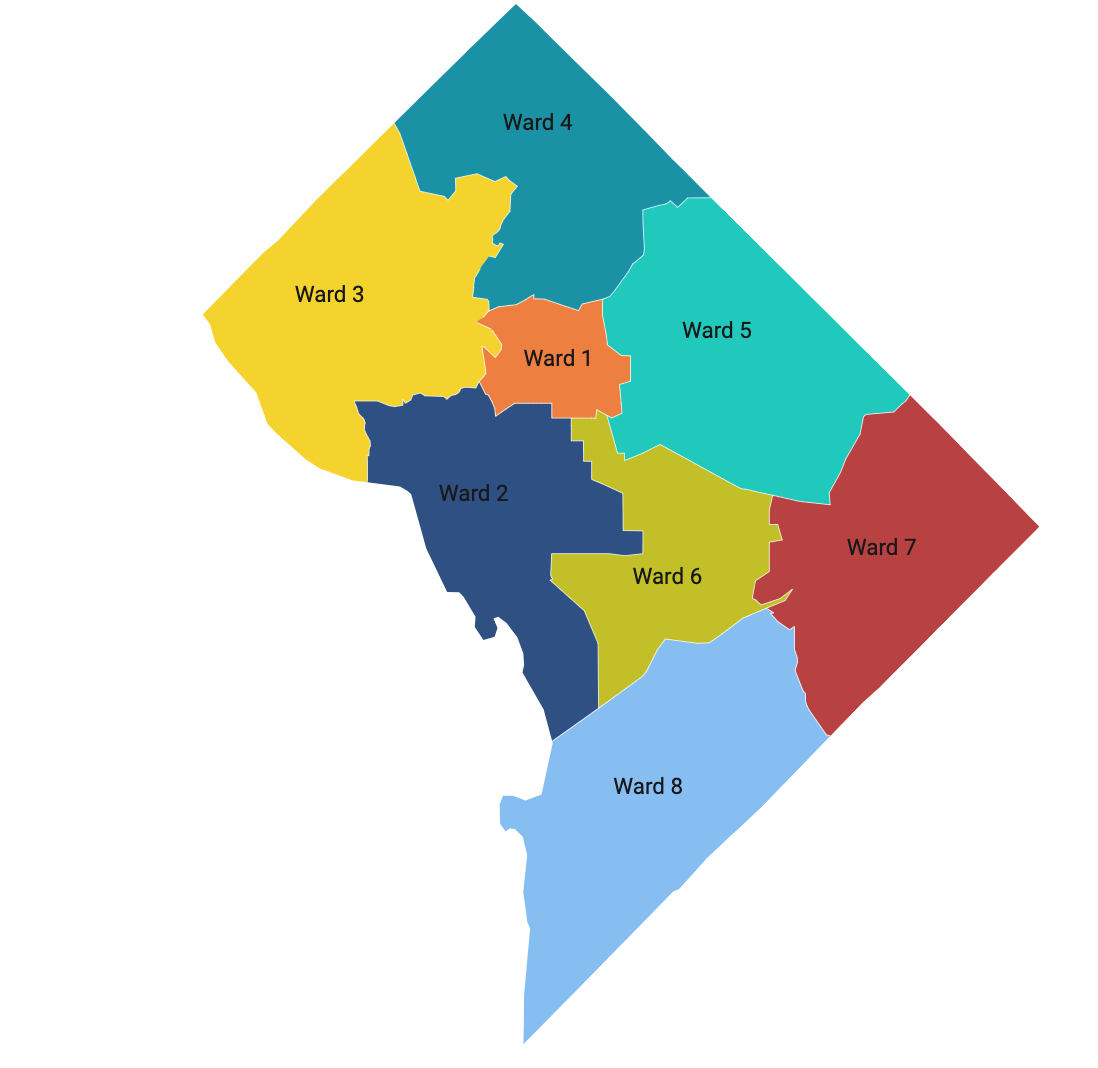
DC’s wards have roughly equal population across the city, with an average population of about 74,000 people. This makes it easy to spot that, while Wards 1, 3 and 6 have more than 20% of their populations partially or fully vaccinated, Wards 7 and 8 have less than half that. The contrast becomes clear when putting these Wards side by side; Ward 6, an area that has an average income of $108,000, has vaccinated 17,174 of its current residents as of April. Ward 8, with an average income of $34,000, have vaccinated less than 8,000 - less than half that of Ward 6. While Ward 8 saw a similar number of COVID cases as Ward 6, Ward 8 had nearly twice the number of COVID deaths.
Many would assume that DC’s vocal initiative to aid the homeless during this time is positive, and overall, it seems like the Department of Health and Human Services has made great strides in accommodating the homeless community. For example, on March 8, Dr. Laquandra Nesbitt, director of the Department of Health, said that “close to 50%” of documented homeless people had received their first dose of the vaccine. Laura Green Zeilinger, director of the Department of Human Services, said that close to 30% of DC’s ‘undocumented’ homeless people, that is homeless people that do not stay in shelters, received the first dose of the vaccine. In their first week of vaccination rollouts for homeless shelters, Unity Health Care, one of the major nonprofits leading the rollouts, reported that 300-400 homeless residents received their first dose of the vaccine.
Abdul Ayuba, was among one of those who received their first shot of the vaccine. Ayuba is a homeless resident of DC who has lived in the city for over a decade. Ayuba received his first vaccine from a local CVS in Tenleytown, and is currently awaiting his second dose in a week. “I was registered, and then one day, a CVS worker was saying they had extra shots they needed to give away. I walked in and got it, no problem.”
This is combined with the fact that DC’s homeless population as of last year was the lowest it has been in 20 years, and is on a slow, but steady decline. Family homelessness dropped 48% in the last five years alone. With all of this progress, many would assume Mayor Bowser and the DC Council is doing everything in their power to help. However, this overlooks several crucial components that may make DC’s helping hand seem less helpful than imagined.
First, we need to evaluate the reasons behind the general disparity of vaccines by Ward. When DC first announced its rollout plan earlier this year, the locations for mass vaccinations were primarily in downtown DC, the wealthiest area of the city. Despite DC’s attempt to make pre-registering more successful, such as lowering eligibility age and focusing on Zip codes, these efforts backfired, opening up more people from wealthier areas for eligibility than those living in those areas in the first place. This created an influx of mostly rich, mostly white, DC residents traveling to low-income wards to receive the vaccine before its local residents.
Yared Abay, a resident of Ward 5, expressed his issues with this disparity. Abay had been pre-registered for over a month when I spoke to him on April 16. Abay is an Uber driver who has lived near Fort Totten for much of his time in the US. Abay, eligible for the vaccine, when asked when he was anticipating getting his first shot, responded “Who knows?”
“I’ve seen the lines at the Covid vaccine locations, most of them are not from the area.”
In contrast, I received my first dose of the vaccine less than three days after registering as a Ward 2 resident, more than a month after Abay had registered.
This is important when considering why homeless residents have been receiving more aid than many would have expected given the disparity in vaccine rollouts. Ward 6 in DC, making up the central downtown of the city, has the most homeless facilities compared to any other part of the city, with five homeless shelters and housing locations, as well as 24 other service locations for homeless residents. That’s almost double the amount in Wards 7 and 8. One of the first locations Unity Health Care visited was Central Union Mission in March, where they completed their initial 300-400 doses administered in their first week. This highlights a potential problem with DC’s self-praise in regards to homeless vaccinations: many of these homeless people were likely vaccinated out of convenience of location rather than hardcore outreach.
And it makes sense when you consider the experiences of homeless shelters employees outside of Ward 6. Dia Zorilla, a representative of Casa Ruby, one of the only homeless shelters in Ward 5 with only 17 available beds, reported that while they do require a negative COVID test confirmation for residents to stay, they did not mention any coordination with Unity Healthcare. This isn’t the case across all small shelters in DC, like New York Avenue Men’s Shelter, where director Michael Ferrell stated that Unity Health Care visits every other week for two days out of the week, consistent with Unity Health Care’s goals stated in March. The inconsistency must be noted, however, as shelters now are under serious financial burden and anymore missteps during this time is lethal.
While DC has made great strides to improve the conditions of unhoused residents during the pandemic, their negligence in addressing vaccine disparities must be acknowledged while our struggle with Covid-19 still wages.