How New York counties continue to approach and adapt to COVID-19
New York especially struggled in the early onset of the coronavirus outbreak. The entire population was hit hard by the pandemic, and the economy statewide declined as a result.
As of April 19, 2021, NY Department of Health reports that more than 49 million people total have been tested for COVID and nearly 2 million of these tests have been positive. Today alone, 116,483 people have been tested in NYS and nearly 3.5% of these tests are positive.
The CDC reports a total of 31,231,869 coronavirus cases in the United States and 561,356 deaths.
More recently though, bustle has slowly returned to the Big Apple and its surrounding counties. Vaccine rollout statewide has sped up, and cases have started to decline, allowing New York to emerge as an underdog. Nationwide, 198 million total vaccines have been administered. New York state has seen 39.6% of its population with at least one vaccine dose, and 26.4% with completed vaccine series.
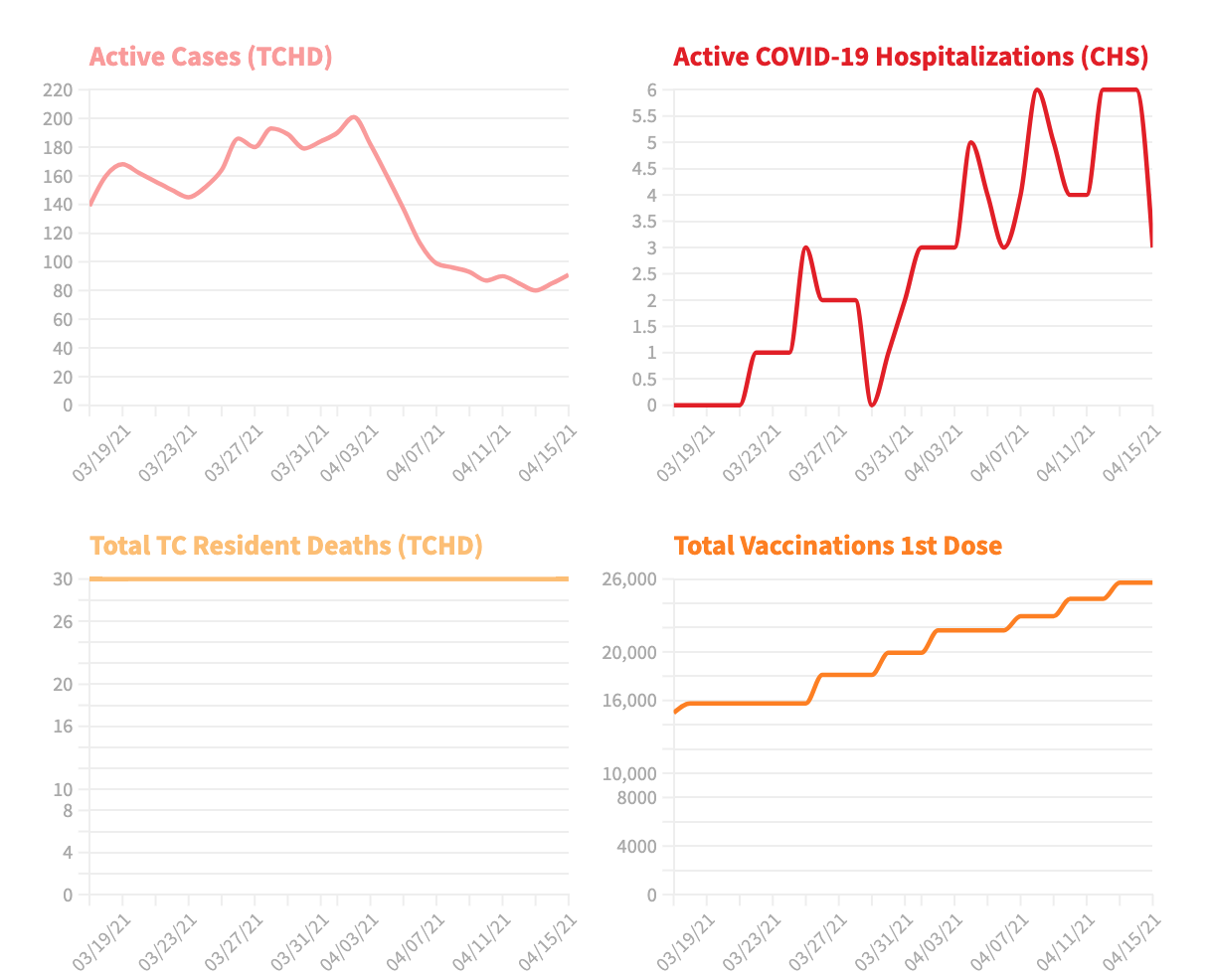
Leading this statewide comeback is Tompkins County, where the total population is 102,793 and there are 8.9 daily new cases per 100,000 people. There is an infection rate of 0.74, and county officials continue to maintain enforced safe guidelines to slow the spread of the virus.
Approximately 32% of these individuals are fully vaccinated. Tompkins County reports 56.7% of their population has at least one vaccine dose, but county officials are aiming for at least 75% of the community fully vaccinated by early summer.
“I wouldn’t be surprised if we hit that 70-75% mark in June,” says Dominick Recckio, Tompkins County Communications Director. “We’re gonna run up against people who are hesitant but really I expect that number to be just about where we end up.”
The county is reliant on vaccines as their best defense against the virus, but masks are still worn to stay safe. A NYT survey indicated 83.3% of the Tompkins County population always wears masks, a common practice among most New York residents in any given county, while only 1.2% never wears masks.
“I’ve definitely seen people at the Walmart not wearing masks from time to time and no one says anything,” says Ian Landrigan, undergraduate senior at Ithaca College. “But everywhere else is very strict. It is expected that you wear a mask no matter where you are on campus and people definitely will give you looks if you aren’t wearing one.”
These community-wide efforts to promote safety have especially been important, as colleges plan for the upcoming fall semester. This past spring semester, both Cornell University and Ithaca College have hosted students on campus, but maintained a relatively remote approach to learning. Both universities will mandate vaccinations for students on-campus and plan to return to in-person learning for the fall.
“I have been on campus both semesters this year. It has felt very safe and generally everyone follows COVID guidelines,” shares Hannah Davis, sophomore undergraduate student at Cornell University. “You have to reserve study spots, there are designated eating tables, and masks are worn everywhere on campus. Upon arrival, we have to quarantine until the people we are living with get a negative test result.”
Every student at the university is tested twice a week, while members of athletics and Greek life are tested three times a week. The university also has a dashboard available to the public, which informs of COVID data, including testing data, vaccination data, and the state of risk present on campus. Davis feels confident in the county and university’s evolving resources and methods to stay connected with community members.

While Tompkins County has continued efforts to limit the spread of the virus, other New York counties continue to struggle for a multitude of reasons.
Chautauqua County has the highest infection rate of 1.14, and active cases continue to rapidly increase daily. This county, with a population of approximately 130,000 people, sees 27.1 daily new cases per 100k and has an 8.6% positive test rate. This county is at very high risk, with only 38.9% of its population vaccinated with a first dose and 55% of ICU capacity used as of today.
Richmond County also is at increasingly very high risk, with 52.7 daily new cases per 100k – a dangerous number considering the county’s population of nearly 480,000 people. The infection rate is 0.94, allowing for a slow spread of the virus, but the county’s positive test rate of 5.9% indicates sufficient testing. Still, only 39% of the population has received a first dose of the vaccine and only 27% is fully vaccinated. The county is at 75% ICU capacity used and although it can likely manage a new wave of the virus, there is still a very high risk at stake.
Allegany County meanwhile has the lowest vaccination rate, with only 29.5% of the population of 46,000 people having been vaccinated with their first dose. This area still is at high risk, with an infection rate of 0.93 and positive test rate of 6.8% indicating the county’s average vulnerability level in comparison to other U.S. counties.
Now that President Biden has met his April 19 deadline for all adults in the U.S. to be eligible for COVID-19 vaccines, there is a greater chance for these New York counties to progress. The United States administers approximately 3.2 million vaccine doses daily, and approximately 84.3 million people have been completely vaccinated, according to the CDC. In the meantime, residents of New York surrounding counties should continue making efforts to contribute to their communities’ safety and wellbeing.