Incarcerated People Have Disproportionately Low Vaccination Rates. Here’s Why
34,500 Texas inmates have tested positive for Covid-19. However, only 2,000 doses have been received for incarcerated people, according to The Covid Prison Project. No data suggests that any incarcerated people in Texas have been vaccinated.
It is imperative to note that some inmates may have been vaccinated at this time. However there is no certainty due to a lack of transparency from correctional facilities in terms of data collection disallows us to say so with certainty.
Despite having the highest number of incarcerated people test positive and die as a result of Covid-19, Texas has been extraordinarily slow in the rollout of vaccines for incarcerated people even though many inmates have been eligible for months.
While Texas stands out in terms of high death rates coupled with low vaccination rates, it is not the only state falling behind in terms of vaccinating incarcerated people.
Across the country incarcerated people, one of the nation’s most vulnerable and disproportionately affected populations to Covid-19, are not getting vaccinated at the same rate as the American public, or even the staff at correctional facilities.
Dr. Kathryn M. Nowotny, Co-Lead Investigator and Co-Founder of The Covid Prison Project, attributes the slow and inequitable vaccine distribution among Texas correctional facilities to a devaluation of the lives of incarcerated people.
“Because you are an incarcerated person you are unworthy of medical protection,” said Nowotny about the underlying belief of Texas representatives and administrators in charge of vaccine distribution among incarcerated people.
With over 70 million Americans fully vaccinated against Covid-19, many feel as though the country is moving toward normalcy. After all, according to the CDC fully vaccinated people can gather indoors without a mask, travel domestically and internationally, and avoid the 14-day quarantine that typically comes with being exposed to the virus.
The same is not true for millions of people incarcerated in correctional facilities. For them, Covid-19 continues to wreak havoc by diminishing community health and targeting marginalized individuals.
Incarcerated people don’t have control over the ability to activate the use of personal protective equipment, or take a rapid Covid test, or talk to their doctor.
Similarly, to receive an email from your local health department and schedule a vaccine at your local CVS is a privilege incarcerated people cannot afford. Vaccines should not be a luxury. They are a basic necessity that must be provided to vulnerable populations in a timely and effective manner.
Alberto Gonzalez, Commission Co-Chair of The National Commission on Covid-19 and Criminal Justice highlighted that vaccines necessary for incarcerated people, as well as staff and visitors, in correctional facilities “should reduce the number of people who become infected with Covid.”
The vaccination rate within correctional facilities is lower than that of the vaccination rate of the general American population.
In fact, according to The National Commission on Covid-19 and Criminal Justice, “on average, the COVID-19 mortality rate within prisons (61.8 deaths per 100,000 people in prison) was double the mortality rate for the general population.” So, why aren’t incarcerated people being vaccinated by the state?
Ultimately, the distinction between the vaccination rate of inmates and the general population can be attributed to the historical and institutional mistreatment of America’s prison population, specifically that their livelihood has been neither valued nor protected.
“The socioeconomic and racial and ethnic makeup of populations in prisons tended to be populations at higher risk of Covid,” said Walsh.
It was within the state’s power to implement compassionate release in correctional facilities with a high number of Covid-19 cases and overcrowding.
Decarceration, which includes accelerated release practices, was recommended by The Commission, stating that “given the significant medical vulnerability of some incarcerated individuals, compassionate release policies should be revised and expanded.
“Reducing population density within prisons is very important in order to provide the space for people to social distance,” said Abby Walsh, Commission Manager of the National Commission on Covid-19 and Criminal Justice.
Yet, compassionate and medical release due to the increased epidemiological risk of contracting and dying from Covid-19 in prisons (which can likely be attributed to the poor health conditions associated with correctional facilities and the compromised health of many inmates, was never the norm in this pandemic.
Gov. Gregg Abbot, for example, actually signed an emergency order, to bar the release of inmates accused or convicted of violent crimes that cannot afford bail. However, inmates who could pay bail with cash were free to go.
This is an element of the cash bail system, which some argue is unconstitutional as it discriminates against impoverished people of color, criminalizing poverty, and produces wealth-based incarceration.
It can also be attributed to the disproportionate mass incarceration of Black and Brown people, a population now disproportionately affected by Covid-19.
So, “why didn’t we compassionately release if we knew early on that Covid-19 that was gonna hit elderly people and people with compromised health in the worst ways?” said Nowotny.
The answer is simple - we as a country and society have failed to recognize the humanity of incarcerated people.
Gonzalez acknowledged that many incarcerated people, currently at a disproportionate risk of contracting and dying from Covid-19 due to their location in correctional facilities, are actually in need of other rehabilitative measures.
“Some people have mental health problems and they shouldn’t be in prison,” said Gonzalez. “Send them to a mental health facility.”
Not only is this a way to show that we recognize the humanity of people who commit crimes, but also a way to reduce population density and control the spread of Covid-19 in prisons, Gonzalez pointed out.
A vulnerable and underprivileged population, people in jails and prisons have never been prioritized in terms of health and safety.
When it comes to public health crises, they have been exploited and experimented upon.
This neglect for humanity and respect for incarcerated people, especially those who are already included within marginalized communities, continues in terms of the racial disparities associated with Covid-19 in correctional facilities, and the country at large.
“We know that incarceration impacts people who are also disproportionately impacted by Covid-19, typically poor or low-income communities, Black and Brown communities,” said Walsh.
For example, despite only making up 13.4% of the population, those who identify as Black or African American make up 15% of the number of people who have died as a result of Covid-19. Additionally, those who identify as Hispanic or Latino who make up approximately 18.5% of the population make up 19% of those who have died due to Covid-19 in the United States.
According to the Center for Disease Control and Prevention, this translates to Black or African Americans being 1.9 times more likely to die from Covid-19 than white people, and Hispanic or Latino persons 2.3 times more likely to die from Covid-19.
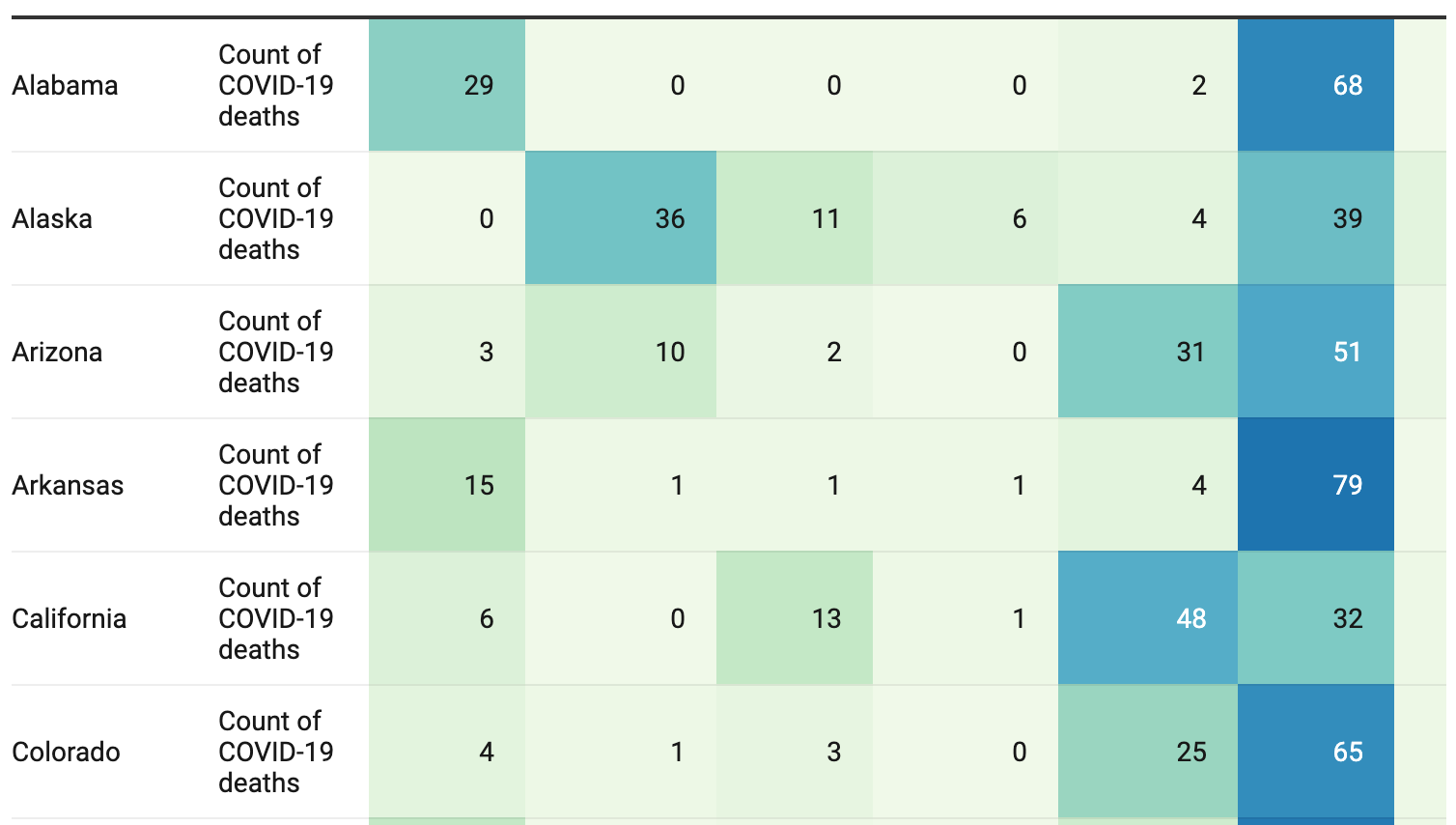
Below is a more detailed breakdown of Covid-19 deaths by race and ethnicity by state.
However, it is imperative to understand that Covid-19 has further exacerbated this inequality. The Commission reports that “people of color have experienced higher infection and mortality rates from COVID-19.”
For criminal justice and government officials to ignore Covid-19 infection and mortality data surrounding incarcerated people, specifically Black and Brown people, and not prioritize them in terms of vaccine distribution and administration is neglect. It is a refusal to recognize incarcerated people as human beings worthy of protection and compassion.
As we as a country move forward towards a “new normal” comprising mandatory vaccinations, continued social distancing, and a fundamental shift in the way we live our lives, it is imperative that incarcerated people are not just included but prioritized.
We must provide correctional facilities the resources to collect and provide data on vaccination distribution in every state, if not to the public to the CDC and Congress, as transparency is key to ensuring incarcerated people are not neglected.
We must move to reduce population density within prisons to provide the space for people to social distance, not just during Covid-19, but in future public health crises of this magnitude.
We must hold politicians accountable when they promise to vaccinate their constituents and provide support to those struggling as a result of Covid-19 - even when those constituents are incarcerated.
Above all, and integrated into every action we take concerning the physical and mental well-being of incarcerated people, we must demand a recognition of the humanity of incarcerated people and ensure we take the necessary steps to adapt our system so that we are better equipped to deal with the next public health threat.